At James Paget Hospital in Great Yarmouth, volunteers have been using Ad-Memoire on tablets to connect and converse with patients.
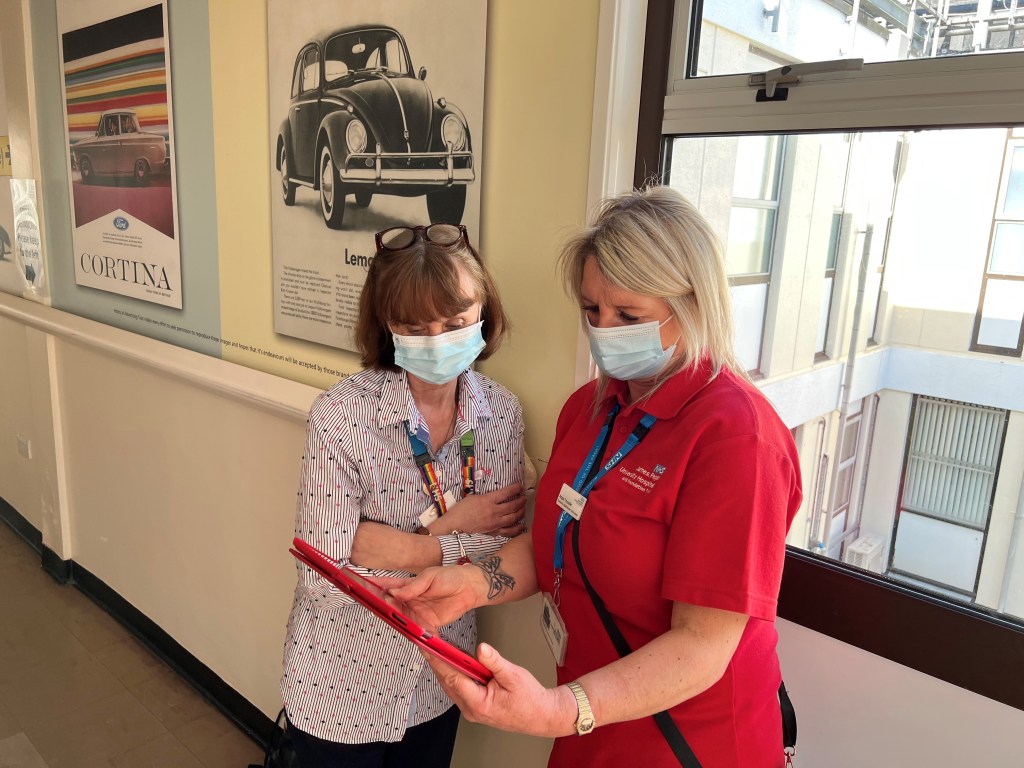
Alison Thayne (Dementia Care Lead) and Angie Trussler (Dementia Befriender Volunteer) using Ad-Memoire
Dementia Befriender Rebecca Kennedy shares her first experience of using the resource:
“Ad-Memoire is a fantastic tool for us to use here at the hospital. My first experience of using it with a patient was when I showed this lady an old Persil advert of some children playing in the street. And her reaction was amazing. Her face lit up: ‘Yes I remember doing that. I remember playing in the street like that when I was a girl.’
“And that opened up the conversation and was really wonderful. I wanted to keep using it to get more reactions like that, so the patients could talk about their experiences and memories.”
‘I remember playing in the street like that when I was a girl’
Alex Kemp, Senior Occupational Therapist, gives his experience of using Ad-Memoire with patientsat the Julian Hospital in Norwich.
As a Senior Occupational Therapist at Julian Hospital, I work with patients living with dementia and complexities in later life. Patients are referred here for an assessment because of challenging behaviour as well as self-neglect and it is our role to support decision making around their appropriate discharge destination. We see patients with varying levels of cognitive impairment, including those living at mild to advanced stages of dementia. Also patients that are living with Parkinson’s disease that impacts on memory and behaviours.
We use Ad-Memoire one-to-one with our patients and have found that it helps us to assess their ability by witnessing how they communicate, focus and see the world. We’re always trying to find things that can be used by people who have lower levels of communicative ability and reminiscence tools such as this can allow us to read their body language.
Our patients engage well with Ad-Memoire because it’s pictorial and in bite-sized chunks that hold their attention. Being able to use different interfaces also helps our patients use Ad-Memoire in whatever way that works for them – a tablet, if they are comfortable with that, or a TV screen if they find that easier.
There are some of the adverts that I don’t recognise, which gives patients the ability to share something with me. At a time when we are there to remind patients that they aren’t managing their short-term memory, it is nice to accompany that with an opportunity for them to exercise their long-term memory and teach us something – we are helping them and they are helping us with something too. The fact that Ad-Memoire is constantly updated regularly allows us to use it each week. I like the ‘Holidays’ and the ‘Motoring’ reels, and the food adverts are the ones patients seem to remember the most. I think anything related to work or DIY could be important additions to the resource.
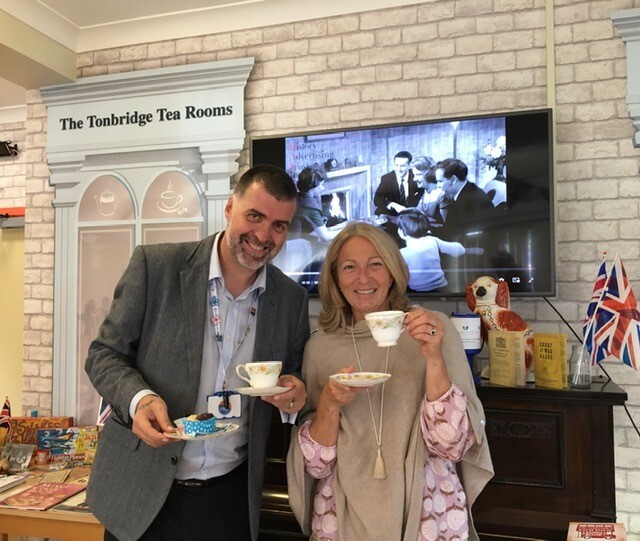
Ad-Memoire has become an integral part of Tonbridge Cottage Hospital’s 1950s Vintage Tea Room, part of the Kent Community Health NHS Foundation Trust. In the video below, Grahame and Fiona share their positive and innovative experience of using the resource:
Grahame Hardy (Specialist Dementia Nurse) and Fiona Arnold (Therapeutic Worker) talk about the impact of Ad-Memoire
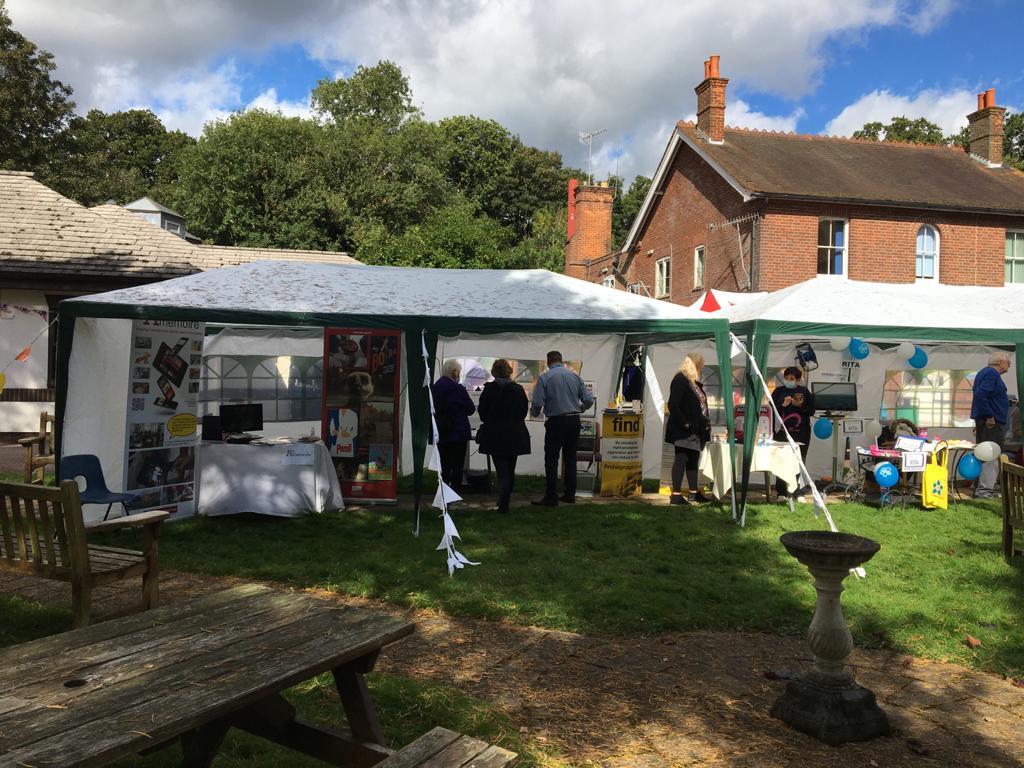
Last September, we attended the grand opening of the Vintage Tea Room and witnessed Ad-Memoire in action.
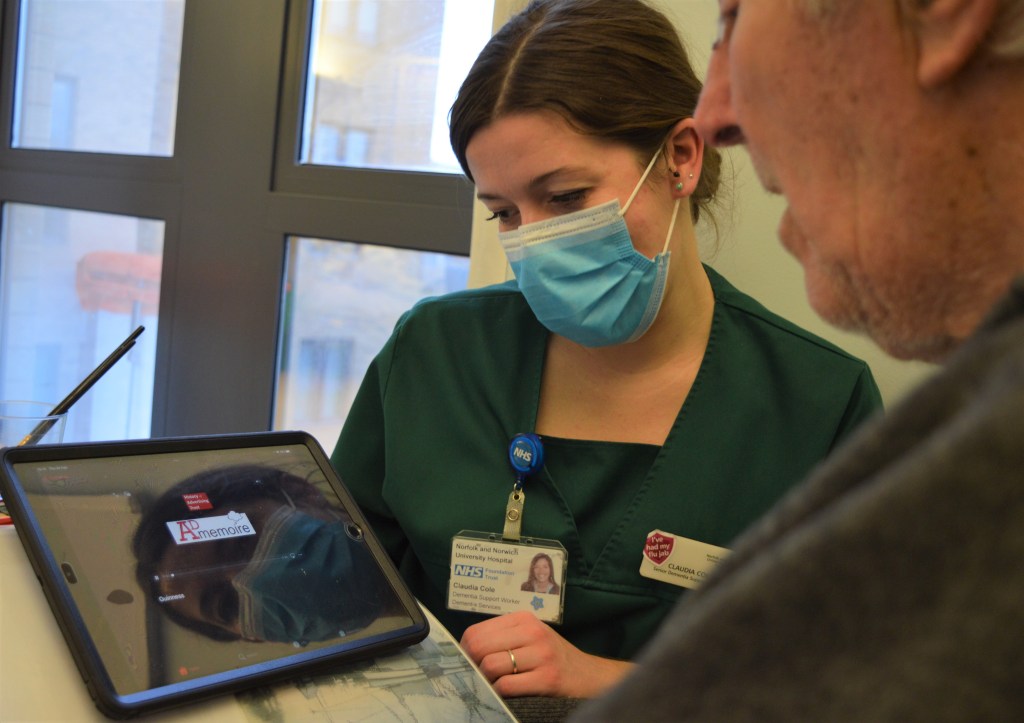
In January 2020, the Dementia Services Team at the Norfolk & Norwich University Hospital (NNUH) began trialling Ad-Memoire. With the app easily downloaded onto existing iPads and tablets, the Team were able to use it on a one-to-one basis with patients, at their bedside or in the Day Room. Listen to the Team’s feedback on the positive impact of Ad-Memoire in the short film below
Liz Yaxley, the Dementia Services Manager, reflects on the trial of Ad-Memoire:
“Ad-Memoire can be used on many levels – in reminiscence, cognitive stimulation, a mood enhancer or just for entertainment value. It is usable anywhere in the hospital, you don’t have to be an expert in Dementia Care or IT to use the app, we see the potential for volunteers to use this too. It’s a minimal set up time, it’s very portable, it’s infection control friendly which is super important, it’s a really useful addition to other activities we use to engage our patients. The equivalent reminiscence tools we use tend to be static pictures –Ad-Memoire adds multi sensory shorts designed to catch attention, have catchy tunes and our staff and patients really enjoy using it.”
A Dementia Support Worker at NNUH shares Ad-Memoire with a patient
HAT and NNUH are grateful to the Alan Boswell Group Charitable Trust for funding the continued use of Ad-Memoire in the hospital for the next year and 4 other hospitals in the Eastern Region.
With the success of the trials, Liz and her team are now using Ad-Memoire regularly on the wards and it’s having a positive impact on people living with dementia during their stay. When possible, relatives have been able to use the app too during their visits and they will be able to continue to do so when patients return home by signing up to the recently released Ad-Memoire One-to-One.






 Ad-Memoire